
Police in Reasi district detained a drug peddler under the PIT-NDPS Act and destroyed an illegally cultivated opium poppy crop in separate anti-narcotics operations.
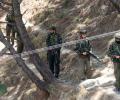
Jammu and Kashmir Police seized over 21.68 kg of illegally cultivated opium plants in Kathua district and booked one person in connection with the case.

A 28-year-old man was arrested with 2.9 kg of opium in Jharkhand's Chatra district. Police also seized 170 kg of poppy husk in a separate operation.

According to the NCRB, cannabis and opium derivatives continued to dominate India's drug seizure landscape in 2024, with enforcement agencies confiscating over 9.42 lakh kilograms of narcotic substances under the NDPS Act.
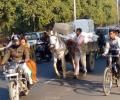
Police in Saharanpur, Uttar Pradesh, arrested a man and seized over 10 quintals of poppy husk, estimated to be worth around 1.5 crore.

Jharkhand police seized narcotics worth Rs 2.55 crore from Palamu and Chatra districts, arresting two individuals and conducting raids to apprehend further suspects.
Police in Sonbhadra, Uttar Pradesh, have arrested Rohit Singh, an associate of drug smuggler Prince Singh, who had previously escaped during an encounter. The investigation further led to the apprehension of two more individuals, Pintu Yadav and Satyapal, involved in cultivating and supplying opium and poppy husk from Jharkhand to Punjab. Authorities seized contraband worth Rs 58.75 lakh.
Delhi Police have dismantled an interstate narcotics syndicate, arresting nine individuals and seizing heroin and crude opium valued at approximately Rs 16 crore.

Rajasthan's Anti-Narcotics Task Force (ANTF) has conducted six operations across the state, seizing narcotics worth Rs 92 lakh and arresting six individuals. The seizures included poppy husk, opium, smack, and cannabis plants, with a significant bust involving a truck with secret compartments in Bhilwara.
Police in Jharkhand's Chatra district seized opium and opium pods in multiple raids, arresting one suspected trafficker and recovering narcotics worth lakhs of rupees.
Jharkhand police have seized a significant quantity of opium and poppy husk in separate incidents across Ranchi and Palamu districts, leading to the arrest of three individuals involved in drug trafficking.

Police in Jharkhand's Chatra district seized narcotics worth Rs 50 lakh during a raid on a house, recovering opium, poppy husk, and poppy seeds. An FIR has been lodged against three members of the household, who are currently on the run.
Jammu and Kashmir Police have registered 176 cases and arrested 202 individuals in the first 50 days of their anti-drug trafficking campaign. The operation has resulted in significant seizures of heroin, poppy straw, ganja, and opium, along with the freezing of assets and demolition of properties linked to drug-related activities.

Punjab Police has dismantled the financial infrastructure of drug-trafficking networks, freezing assets worth Rs 300 crore linked to alleged drug smugglers.
The central government has for the first time allowed a private company, Bajaj Healthcare, to process opium to extract alkaloids used to make pain-killers, cough syrups, and even cancer drugs. Two government factories in Ghazipur, Uttar Pradesh, and Neemuch, Madhya Pradesh, do the work yet, processing some 800 tonnes of opium gum annually to extract alkaloids. The government on Tuesday gave Thane-based Bajaj Healthcare an initial contract to process 500 tonnes of opium gum annually and wants production to be at 800 tonnes per annum (tpa) in the next five years, indicating the state's exit from the highly-regulated sector.
Police in Rajasthan's Jhalawar have frozen assets worth more than Rs 2.5 crore belonging to an alleged drug trafficker under provisions of the NDPS Act.
Haryana Police launched 'Operation Aakraman-21' across the state, resulting in numerous arrests and seizures of drugs, illicit liquor, and illegal arms.
Punjab's AAP government is aggressively tackling drug trafficking through strict enforcement, community involvement, and preventive education, resulting in significant arrests, seizures, and a high conviction rate.

Punjab Police have arrested 167 people in an anti-gangster campaign and 75 drug smugglers, seizing weapons and drugs as part of ongoing efforts to combat crime.
The Punjab Police have arrested over 22,000 individuals, including 461 associates of gangsters, in the past three months as part of its anti-gangster drive 'Gangstran Te Vaar'. The operation has also resulted in substantial recoveries of weapons, explosives, and drugs.

The US spent $1.5 million a day since 2001 fighting the opium war in Afghanistan. After hundreds of airstrikes failed to curtail the Taliban's $200-million-a-year opium trade, the US military quietly ended the campaign when the Trump administration officials engaged in direct peace talks with the Taliban, notes Atanu Biswas.
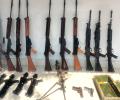
The Meitei group Arambai Tenggol surrendered 246 firearms to security forces in Manipur, bringing the total number of weapons surrendered to 307. The surrender follows a deadline set by Governor Ajay Bhalla for the return of illegal weapons. Arambai Tenggol's decision was influenced by assurances from the governor, including the eradication of opium poppy cultivation, implementation of border fencing, and a general amnesty for members of the group. Officials believe the surrender will contribute to restoring peace in the state, which has been rocked by ethnic violence for nearly two years. The police have urged others in possession of illegal firearms to surrender them before the deadline. Former Chief Minister N Biren Singh welcomed the surrender, calling it a "big step towards peace."
"We have raided and destroyed poppy crops in 24 acres of land under the Imamganj police station," Omprakash Singh, a senior official of the Excise Department, told rediff.com. Singh said the Maoist had cultivated opium to make money for their illegal activities and continue their operations against the police.
India is the highest consumer of heroin in South Asia and also appears to be producing its own opium poppy, which is the raw material for heroin, according to the latest report of the United Nations Office on Drugs and Crime (UNODC).
The US has listed India among the world's major illicit drug producing and transit countries alongside Afghanistan and Pakistan, while praising its government for strong counter-narcotic measures and efforts to curb the illegal production.

Set mostly aboard the Ibis, 'a vessel into which (the author) poured his ideas', the book has a vast multicultural cast of characters and speaks several tongues -- the unique patois of the lascars -- a unique breed of multiethnic seafarers -- and ancient curses straight out of Hobson-Dobson.
Termed as 'opium brides', the daughters of poor poppy farmers are often given to drug traffickers if their fathers are unable to pay the loan taken for growing the illicit crop, because of the official action.

The appointment of Col (retired) Nectar Sanjenbam for five years followed Union Home Minister Amit Shah statement last month that Kuki people started entering Manipur from Myanmar illegally following a military crackdown on militants.
Amitav Ghosh discusses his new book River Of Smoke, the art of writing a trilogy, his dramatic characters, the nuanced language they speak, and the Imperial intrigues that culminated in the Opium Wars.
Most of Afghanistan's opium is trafficked out of the country and then processed into heroin and morphine.

Opium has joined the list of conventional electoral issues such as roads, water supply and health. PB Chandra reports how the supply of opium will play a decisive factor in the elections
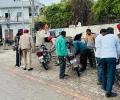
Punjab Police launched a statewide operation against drugs, conducting raids at more than 750 locations as the cabinet sub-committee on the drug menace held its first meeting on Saturday. Around 12,000 police personnel were involved in the operation being carried out as part of an anti-drug campaign. Punjab Chief Minister Bhagwant Mann on Friday set a deadline of three months to make the state drug-free. The operation led to the arrest of 290 drug smugglers after registration of 232 FIRs. Police recovered 8.14 kg heroin, 1.21 kg opium, 3.5 kg ganja, 19 kg poppy husk, 700 grams charas, 16,238 intoxicant tablets, injections and Rs 8.02 lakh cash.
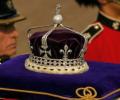
The United Kingdom extracted USD 64.82 trillion from India over a century of colonialism between 1765 and 1900 and USD 33.8 trillion of this went to the richest 10 per cent -- enough money to carpet London in notes of 50 British pound almost four times over.

'A very large part of this would have come from opium.'

According to a New York Times report, the Marine Expeditionary Brigade is leading the operation, which has been described as the first major push in southern Afghanistan by the newly bolstered American force.

The fulcrum of victory or defeat of parties attempting to form a government is held by smaller players and those willing to defect.
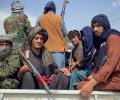
In fact, the Taliban apparently collects about 10 per cent as cultivation tax from opium farmers and 15 per cent as heroin tax from laboratories and smugglers that smuggle narcotics into Pakistan. This, by itself, is a revenue stream estimated at USD 250-300 million.

The seizure of liquor has been a matter of concern for the EC since it apprehends that the liquor might be used to influence the voters.

India also called for crippling the illicit drug trade which provides financial sustenance to these terror outfits.

The police chief asked the youth to focus on studies and their careers and not indulge in violence by getting swayed by the propaganda.
